


Quick answer: Pain is not a pure readout of tissue damage — it can persist long after healing or appear with no structural injury at all. The biopsychosocial model explains why: nociceptive signals are interpreted by the central nervous system, then shaped by psychological factors (fear, anxiety, the meaning you give the pain) and social context. That is also why staying appropriately active after injury matters so much. If persistent pain is holding you back, we evaluate the whole picture at our physical therapy clinic in Long Island City. For back pain specifically, see back pain physical therapy in Long Island City.
Frequently Asked Questions
Can you have pain without an actual injury?
Yes. Pain is produced by the central nervous system interpreting many inputs, not just tissue damage signals. In chronic pain syndromes, pain can persist long after complete tissue recovery — and sometimes occurs with no structural damage at all. Science is still working out exactly why.
What is the biopsychosocial model of pain?
A framework where biological, psychological, and social-cultural factors interact to determine whether — and how much — a person feels pain. It spans nociception (damage signals), central processing, pain appraisal (the meaning given to pain), pain behaviors, and social rules around illness.
Why do the same injuries hurt differently in different people?
Because pain perception is shaped by more than the injury: fear, anxiety, stress about consequences, and the beliefs of people around you all influence the experience. An athlete facing a lost season may suffer more from the same shoulder injury than someone whose livelihood isn’t affected.
Why do physical therapists want you to stay active after an injury?
Because beliefs and behaviors shape pain. Avoiding all activity out of fear can entrench pain and disability, and is a key pathway from acute to chronic pain. Guided, appropriate activity supports both tissue healing and a healthier pain experience.
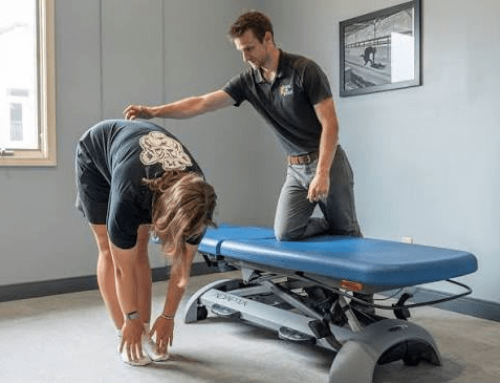


One of the most common questions I’m asked as a physical therapist is “Why am I having pain when I don’t have an injury?” This is a good question, especially for a pro athlete who strives to always be in the best shape possible.
The answer is that we are still far from understanding how the pain sensation lingers and persists, in the case of chronic pain syndromes long after complete recovery and at times with no injury (structural damage) at all.
In this blog post I’ll try to explain the pain sensation through the biopsychosocial model, which is one of several suggested models and theories of understanding the pain sensation.
The biopsychosocial model of pain states that the interaction between different variables, including biological, psychological and social-cultural factors, will cause a person to either sense pain or not. In addition it explains why certain activities/movements will cause more/less pain than other activities/movements.
Here is a quick summary of the progression of the pain sensation and the different variables that are taken into account:
Nociception – Most athletic injuries will result in tissue damage, either acute (traumatic) or chronic (as in the case of overuse injuries). Certain nerve endings that are located in and around the damaged tissue will target the pain receptors, also known as nociceptors, in the region to send the central nervous system a signal that tissue damage has occurred.
Pain – from this moment on, pain is interpreted and translated into the sensation itself as it affects the individual in the central nervous system. This stage includes complex interactions between different regions of the spinal cord and the brain.
From this point onwards psychosocial and biological factors will decide and affect the individual’s pain perception.
Pain appraisal – the pain can lead to different negative responses such as depression, anxiety and fear. You can imagine how stressful it would be for an elite NBA player to miss a whole season or even a couple of games because of pain, or injury. Therefore suffering is a distinct phenomenon from pain. Overall, pain appraisal is the meaning given to the pain experience itself.
Pain behaviors – both environment and culture can play a significant role in how you perceive pain and how it will affect your behavior, even as it relates to facial expressions and verbal behaviors. As an example, an athlete surrounded by people who believe that the injury is not as bad as it really is may change the athlete’s behavior to the point that he/she will try to ignore the movements that used to be painful. On the other hand, being surrounded by the wrong people may lead the athlete to avoid physical activities all together because of their beliefs. Needless to say, this is the number one reason physical therapists want athletes to stay active after an injury.
Social rules for pain and illness – these rules will directly affect how one will experience the pain and change his/her role in society.
At times not all variables are found to affect the injured person but should be considered in any injury to avoid acute pain becoming chronic, and to resolve pain all together. In the sports performance world, this model can explain why a NFL quarterback might be suffering (pain appraisal) and change his behavior more so than a software engineer after the same shoulder injury.